Have you ever wondered why some days you feel calm, focused, and able to cope and on other days even small things feel overwhelming or completely draining?
These changes are not random. They are directly connected to how your nervous system is functioning.
In trauma therapy, one of the most effective ways to understand this is through the concept of the window of tolerance. This framework is used in EMDR (Eye Movement Desensitization and Reprocessing) and CPT (Cognitive Processing Therapy) to help people better understand and regulate their emotional responses.
I commonly teach the window of tolerance to clients doing trauma therapy in West End Ottawa with me. To learn more about my services please click here.
What Is the Window of Tolerance? | Trauma Therapy in West End Ottawa
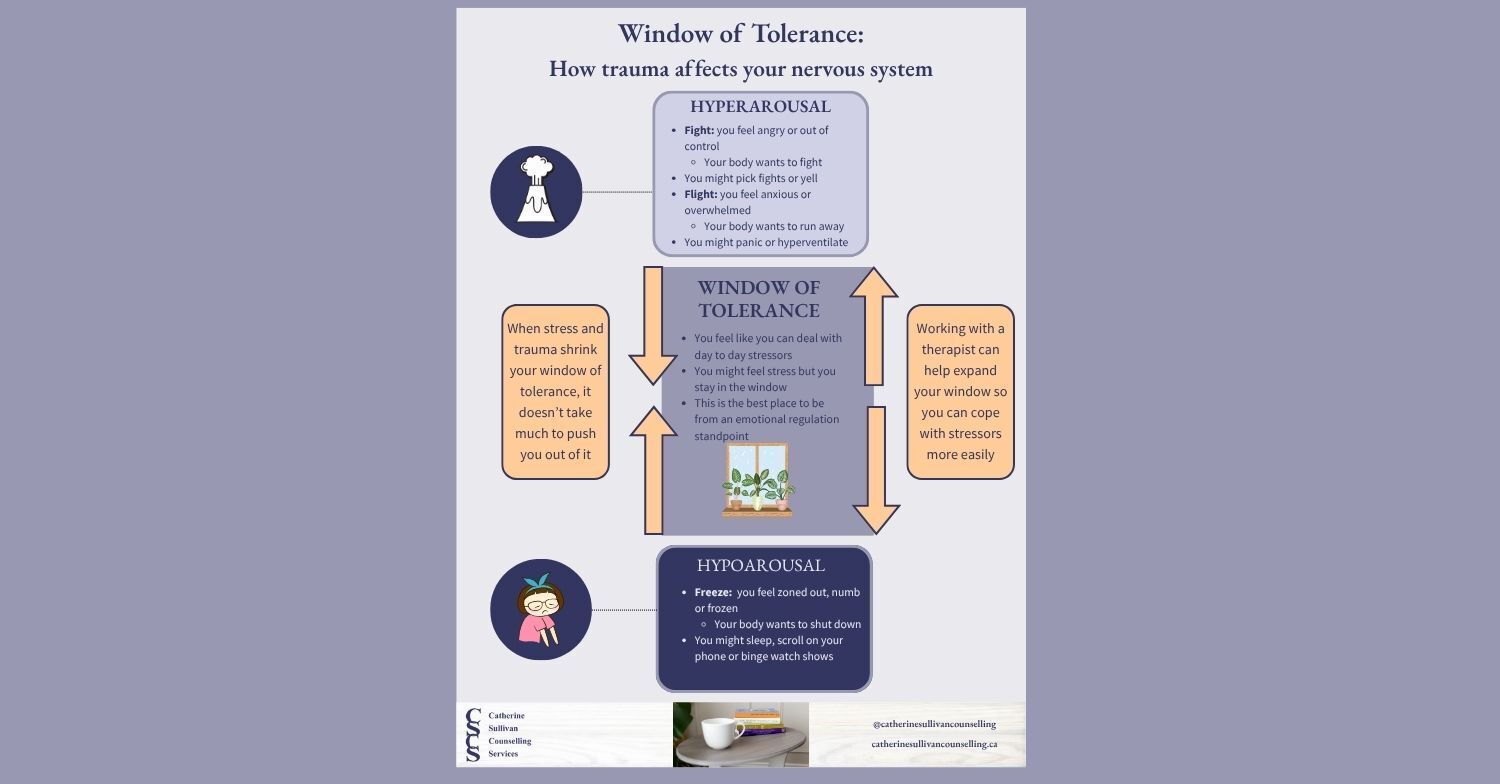
The window of tolerance refers to the zone where your nervous system is balanced and regulated.
When you are within your window, you are able to:
- Deal with day to day stressors
- Stay emotionally regulated
- Stay present in the moment
- Experience stress but it does overwhelm your system
This is the state where therapy is most effective—whether you’re engaging in EMDR, CPT, or other trauma-focused approaches available in West End Ottawa through Catherine Sullivan Counselling Services. Please click here to book a free consult with me.
What Happens When You Leave Your Window of Tolerance?
When your nervous system perceives a threat, it can shift you outside your window of tolerance. This happens in two ways:
Hyperarousal (Fight or Flight)
This is a state of heightened activation. Your body is preparing you to fight or run away.
Common signs include:
- Anxiety or panic
- Anger or feeling out of control
- Racing thoughts
- Feeling constantly “on edge”
Hypoarousal (Freeze)
This is a state of reduced activation. Your body is preparing to shut down.
You might experience:
- Numbness
- Low energy or fatigue
- Brain fog
- Dissociation
In trauma therapy, hyper- and hypo-arousal are addressed using grounding and emotional regulation strategies before deeper processing begins in approaches like EMDR or CPT. Click here to download my Free Handout on the Window of Tolerance.
Signs You’re Outside Your Window of Tolerance
Recognizing these signs is a key part of trauma therapy.
Hyperarousal signs:
- Panic attacks
- Difficulty breathing and calming down
- Picking fights with others
- Yelling and screaming
Hypoarousal signs:
- Feeling numb or disconnected
- Low motivation
- Doom scrolling
- Binge watching TV shows
Why the Window of Tolerance Matters | West End Ottawa Trauma Therapy
Understanding your window of tolerance helps shift your perspective from:
“What’s wrong with me?”
to:
“Why is my nervous system having this reaction right now?”
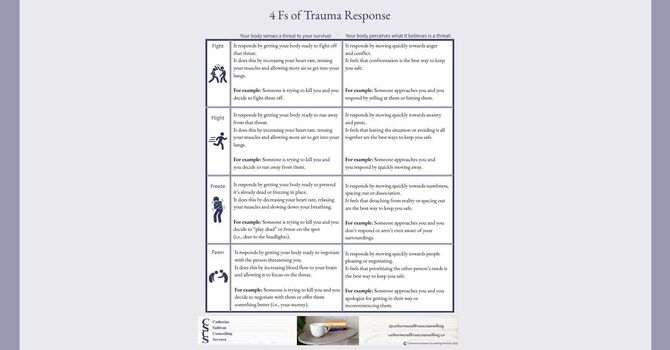
The way your nervous system responds is an evolutionary survival response. This response gets re-wired when you experience trauma so that it overreacts to incidents and thinks they are a direct threat to your survival.
Trauma and a Narrowed Window of Tolerance
Trauma and stress narrow your window of tolerance.
This means:
- You may become overwhelmed more easily
- Emotional reactions may feel more intense
- You may spend more time in fight, flight or freeze states than in your window of tolerance
This is why many people seek out support using EMDR and CPT—these approaches help to regulate and retrain the nervous system so that you can spend more time in your window of tolerance.
How EMDR and CPT Help to Expand Your Window of Tolerance | West End Ottawa Trauma Therapy
EMDR Therapy in the West End of Ottawa
EMDR (Eye Movement Desensitization and Reprocessing) helps the brain reprocess traumatic memories so they no longer feel immediate or overwhelming. Click here to read by Blog Post about how EMDR helps your brain heal from trauma.
As this happens:
- Emotional intensity decreases
- Triggers become more manageable
- Your window of tolerance expands
CPT Therapy in the West End of Ottawa
CPT (Cognitive Processing Therapy) focuses on identifying and restructuring unhelpful beliefs related to trauma.
In CPT clients:
- Challenge stuck points
- Develop more balanced thinking
- Reduce emotional reactivity
Engaging in the practices above helps to expand your window of tolerance.
Practical Regulation Strategies
These strategies can help bring you back into your window of tolerance.
- Breathing exercises
- Grounding exercises
- Reducing stimulation (i.e., leaving a crowded room)
- Exercise
- Music or conversation
- Drawing or colouring
- Any activity that you enjoy (e.g., cooking, reading, doing a hobby)
These tools are integrated into EMDR and CPT sessions with Catherine Sullivan Counselling Services in West End Ottawa. If you're interested in learning more about these services go to my Services Page.
Working with a Trauma Therapist
If you are feeling stuck outside your window of tolerance, working with a trained therapist can make a significant difference.
My trauma therapy services include:
- EMDR therapy for processing trauma
- CPT for restructuring trauma-related beliefs
- Nervous system regulation strategies
- Psychoeducation about the window of tolerance
FAQs:
Question: Why can’t I control my emotions? I feel like I should be able to.
Answer: Emotional regulation is not about control, it's about whether or not your nervous system has the capacity to manage your emotions. If you’ve experienced trauma, your capacity will be lessened. You need to work with a therapist (click here to book an appointment) to help you understand your emotions and increase your capacity to manage them - in other words learning how to stay in your window of tolerance.
Question: If I avoid stress this will fix things, right?
Answer: Avoidance is a short term solution. It’s not possible to completely avoid stress. Avoiding things will not increase your window of tolerance.
That’s why trauma therapy in the West End of Ottawa focuses on helping you to expand your window in a gentle and supportive way.
Question: Why do I still get triggered and leave my window of tolerance if I’m in therapy?
Answer: Triggers are part of healing. In EMDR we reprocess triggers so you will be exposed to them. In CPT we examine how traumatic events have changed how you think about the world. Both types of therapy help triggers to become less intense and more manageable over time.
Building Your Window of Tolerance
Expanding your window of tolerance is a gradual process.
It involves:
- Increasing awareness
- Practicing emotional regulation skills
- Processing trauma safely
Working with a therapist offering trauma therapy in West End Ottawa, such as myself, can help guide you through this process in a structured and supportive way. Please click on this link to schedule a Free Consult.
Final Thoughts
The concept of the window of tolerance offers a compassionate, science-based way to understand your emotional experiences.
With the support of Catherine Sullivan Counselling Services it is possible to:
- Feel more calm and grounded
- Learn to regulate your emotions
- Expand your ability to handle stress
Healing doesn’t require eliminating stress, it requires building a nervous system that can work through it and return to its window of tolerance more quickly and easily.